What Happens During a Professional Curtain Cleaning Service?
Have you ever wondered what actually happens during a professional curtain cleaning service? Unlike carpets or upholstery, curtains hang vertically near windows and require specialized handling to avoid structural damage. Drapery panels are exposed to unique environmental factors, including daily UV exposure, condensation moisture, and dust-laden breezes. Cleaning them requires a deep understanding of textile science, chemistry, and specialized machinery. In this article, we explain the step-by-step process of a professional curtain cleaning service, illustrating how experts restore the beauty and hygiene of your window treatments safely.
Step 1: Fabric Inspection and Fiber Identification
The process always begins with a thorough inspection of the drapes. Technicians identify the fabric composition, check for care labels, and test the colorfastness of the dyes. They also inspect the condition of the curtain backing, tracks, hooks, and seams to ensure the fabric can safely undergo the cleaning process without tearing, fading, or peeling.
Testing for Fiber Composition
Understanding the difference between natural and synthetic fibers is critical. Natural fibers such as silk, linen, and cotton have cell structures that absorb water readily, which can cause them to shrink or warp under direct heat. Synthetics like polyester and nylon are highly stable when exposed to heat and moisture. Technicians analyze the weave structure and, if necessary, perform a burn test on a loose thread from the hem to determine the exact material makeup before applying any solution, ensuring complete safety.
Checking for Sun Damage and Fiber Rot
Curtains are exposed to daily sunlight, which causes ultraviolet degradation over time. This makes the fabric brittle. During the assessment, technicians inspect the fabric panels for signs of "sun rot," particularly along the folds that face the window. If the fibers are weakened, standard high-pressure steam cleaning can tear the material. In such cases, the technicians adjust their pressure and temperature settings to protect the fragile drapes from damage, ensuring the integrity of the fabric is preserved.
Step 2: Pre-Vacuuming and Dust Removal
Before applying any moisture or steam, the technician performs a deep dry vacuuming. Using a specialized low-suction vacuum equipped with a soft brush, they remove loose surface dust, cobwebs, pet hair, and airborne particulates from both the front and back of the curtain panels. This step is critical because applying steam directly to dusty fabric can turn the dust into mud, leaving ugly streaks on the drapes that are difficult to remove.
Focusing on High-Accumulation Zones
Dust gathers heavily in specific areas of the curtain. The top pleats (headers) and the bottom hems are primary collection points. Technicians use specialized narrow nozzles and soft brushes to clean these areas carefully. By removing this dry particulate matter before wetting, they ensure a cleaner result and avoid pushing dirt deeper into the fabric weave. This detailed approach is what distinguishes professional care from standard DIY methods.
Step 3: Spot and Stain Pre-treatment
If the curtains have visible stains (such as grease, food spots, watermarks, or mold), the technician applies specialized pre-treatment solutions. These solutions are formulated to gently break down the chemical bonds of the stain without harming the underlying fabric fibers or stripping the dye, ensuring a safe stain removal process.
Understanding Spot-Treatment Chemistry
Different stains require different chemical solutions. For example, oil-based stains (like grease or makeup) require a solvent-based pre-treatment to break down lipids. Water-based stains (like coffee or wine) require pH-balanced enzymes to lift the pigment. Mold requires specialized non-toxic fungicides to neutralize spores. The technician carefully applies the correct agent and blots the stain with a microfiber cloth, working from the outside of the stain inward to prevent it from spreading, protecting the surrounding fabric.
Step 4: Hot Water Extraction and Steam Cleaning
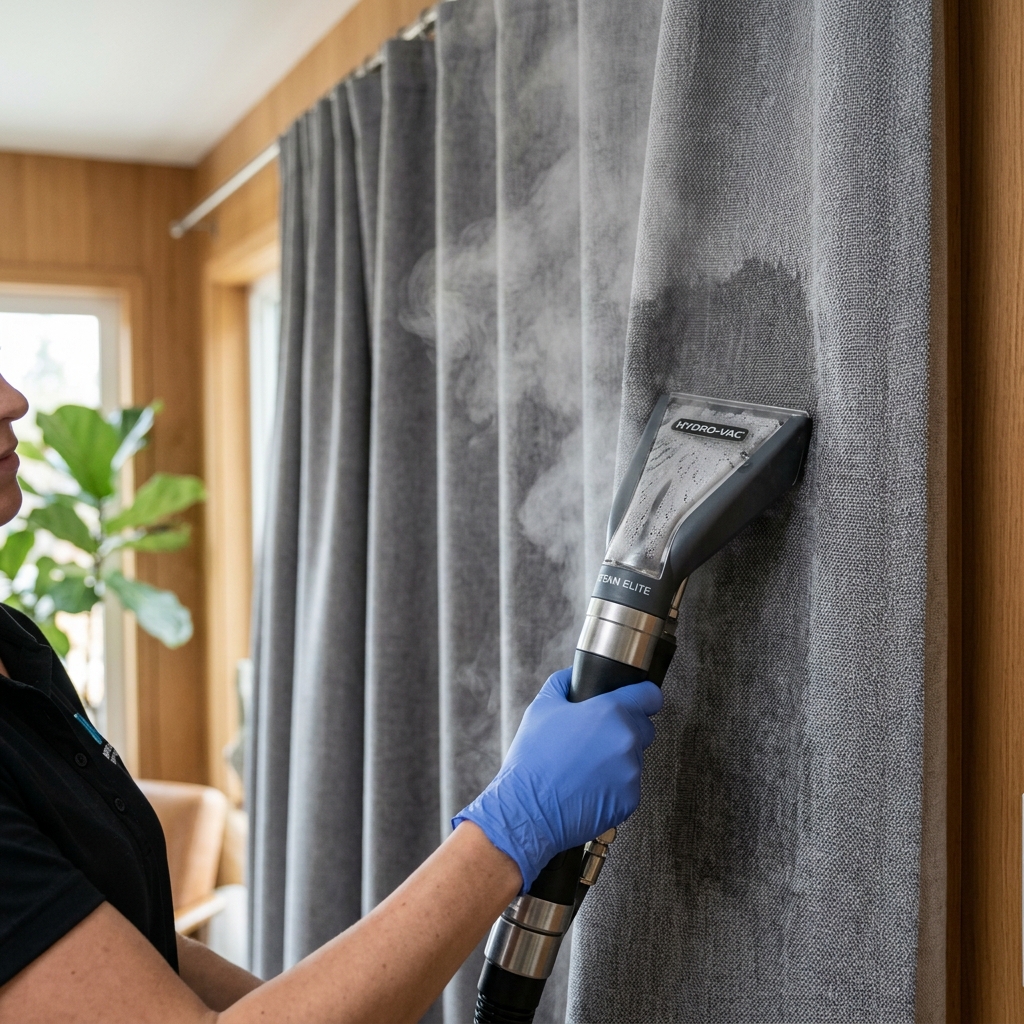
The main cleaning phase utilizes professional steam extraction machinery. The machine generates hot water vapor that is injected deep into the fabric weave. This heat emulsifies oily residues, kills dust mites, and sanitizes the fabric. Simultaneously, a powerful vacuum extracts the moisture along with the dissolved dirt and allergens, leaving the curtains clean and fresh.
Moisture and Suction Control
The key to safe steam cleaning is balancing the moisture input with the vacuum extraction. If too much water is left in the fabric, the curtain can shrink, stretch, or develop mold. Professional extraction machines feature high-powered twin motors that pull 90% of the moisture back out instantly. This low-moisture approach ensures the drapes remain flat, dry quickly, and retain their original shape, avoiding any structural warping after the service is completed.
Step 5: Post-Clean Inspection, Grooming, and Drying
Finally, the technician performs a post-cleaning inspection to ensure all stains have been addressed. The curtains are groomed so that the fabric fibers settle in their natural direction, and left to air dry. Because of the low-moisture system used, the curtains dry quickly while hanging, keeping their shape and pleats intact, allowing you to enjoy your clean room on the same day.
Grooming and Re-Pleating the Drapes
Once cleaned, fabrics like velvet or heavy chenille need to be groomed to prevent the pile from matting as it dries. The technician uses a soft upholstery brush to comb the fibers upward, restoring their natural texture. They also arrange the pleats manually so that the curtains dry in their intended shapes, maintaining a crisp, elegant look for your home. This process of "dressing the drapes" ensures the curtains hang beautifully and look as good as new.
Promoting Quick Drying
While the extraction process removes most of the moisture, the curtains will remain slightly damp. The technician will open adjacent windows to promote natural airflow and set up portable air movers or fans to accelerate drying. This final step prevents any humidity buildup, allowing you to enjoy your clean, fresh curtains on the same day with complete peace of mind, knowing that your indoor air quality is restored.
Step 6: Optional Protection Treatments
Once your curtains are clean, dry, and dressed, technicians may offer optional protective treatments to preserve the results. A fabric protector can be applied to the panels to create an invisible barrier that repels oil, water, and soil. This barrier prevents liquid spills and household dust from bonding with the fibers, making subsequent vacuuming much more effective. Applying a protector is highly recommended for high-traffic areas, dining rooms, and homes with young children or indoor pets, as it helps maintain the clean look of your window treatments for a longer period.
Checking the Track and Glider System
During the re-pleating and dressing phase, technicians also inspect your track and glider system. Over time, dust and grime accumulate in the curtain tracks, making it difficult to pull the drapes open or closed. The friction from a sticky track puts physical stress on the curtain hooks and seams. Technicians can apply a dry silicone spray to the track to ensure the gliders slide smoothly, protecting the fabric from unnecessary pulling and keeping your window treatments operating effortlessly.