
The Ultimate Curtain Fabric Cleaning Guide: Care Instructions for Every Material
Curtains do a lot of quiet work in a home. They filter light, trap dust, absorb odours, and shield your rooms from outside grime - which means they also accumulate more dirt than most people realise, far more than a quick vacuum can address. But not every curtain can be cleaned the same way. The right method depends entirely on the fabric, and getting it wrong can mean shrinkage, watermarks, faded colour, or a pile that never looks the same again.
This guide walks through how to identify your curtain fabric, general cleaning principles that apply across the board, and specific care instructions for the most common curtain materials.
Why Fabric Type Matters So Much
Curtain fabrics vary enormously in how they respond to water, heat, and agitation. A cotton curtain that can be machine washed on a normal cycle might shrink or lose its shape if a linen curtain made the same way went through the same wash. A silk curtain can water-stain permanently from a single careless spray of cleaning solution. Velvet can crush and lose its texture if pressed or wrung the wrong way. Understanding your fabric before you clean it isn't optional - it's the difference between curtains that last for years and curtains that need replacing after one bad cleaning attempt.
How to Identify Your Curtain Fabric
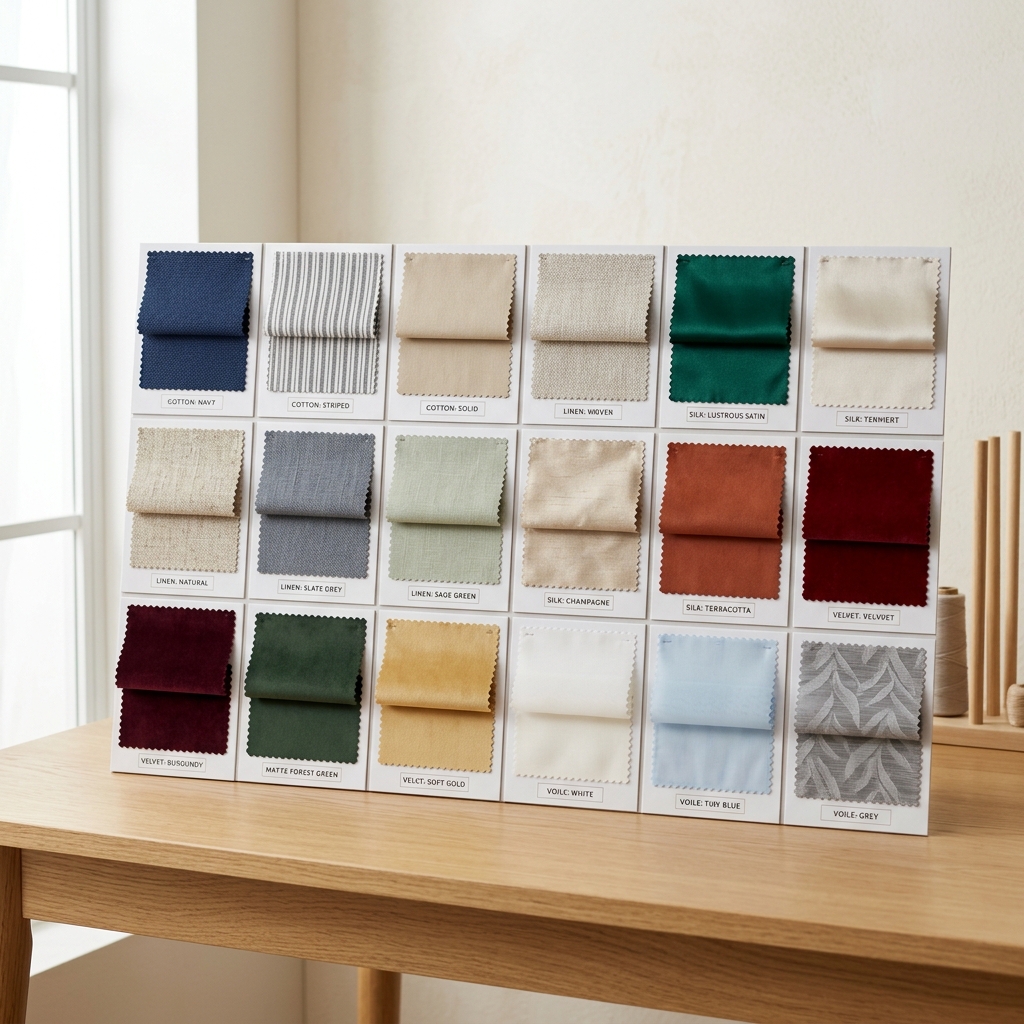
If you're not sure what your curtains are made from, start with the care label sewn into a side seam or hem - most curtains include one, even if it's faded or hard to read. If there's no label, a few physical clues can help narrow it down: cotton and linen feel crisp and slightly textured; polyester feels smooth and slightly synthetic, often with a slight sheen; silk has a natural sheen and a very smooth, almost slippery feel; velvet has an unmistakable soft, raised pile; and sheer or voile fabrics are lightweight and semi-transparent, usually polyester or a polyester blend.
If you're still unsure, it's worth erring on the side of caution and treating the fabric as delicate, or testing your cleaning method on a small hidden section - such as the bottom hem or a side seam - before applying it to the whole curtain.
General Curtain Cleaning Principles
- Vacuum first, always. Regardless of fabric, dust and loose debris should be removed before any wet cleaning. Use a soft brush attachment and work from top to bottom, holding the curtain gently taut with your other hand.
- Check the care label before doing anything else. Symbols for machine wash, hand wash, dry clean only, and "do not wash" should always take priority over general guidance, since manufacturers know exactly how their fabric and any backing or lining will respond.
- Test in an inconspicuous spot first. Whether you're using a cleaning solution, a steam cleaner, or simply water, always test on a hidden section first and wait to see how the fabric responds before treating the whole curtain.
- Address stains before general cleaning. Spot-treating a stain first, then cleaning the whole curtain, generally gives better results than hoping a full wash will lift a stubborn mark on its own.
- Dry curtains fully before rehanging. Rehanging a curtain while it's still damp can lead to watermarks, mildew, or the fabric stretching out of shape under its own weight.
Cotton Curtains
Cotton is one of the more forgiving curtain fabrics and generally tolerates machine washing well, provided the care label doesn't say otherwise. Wash on a gentle or normal cycle in cool to lukewarm water using a mild detergent, and avoid overloading the machine so the fabric can move freely. Cotton curtains can usually be tumble dried on a low setting, though air drying reduces the risk of shrinkage. Iron on a medium setting while the fabric is still slightly damp for the crispest result.
Linen Curtains
Linen is durable but prone to wrinkling and can shrink if washed in water that's too warm. Hand washing or a gentle machine cycle in cool water is the safest approach, using a mild detergent and avoiding harsh wringing, which can damage the fibres and distort the weave. Reshape the curtain while damp and hang or lay flat to dry, since linen holds its shape best when it dries naturally rather than being tumble dried.
Polyester Curtains
Polyester is one of the most low-maintenance curtain fabrics and is usually safe to machine wash on a gentle cycle in cool water. It resists wrinkling well and can typically be tumble dried on a low heat setting. Avoid high heat when ironing, since polyester can scorch or melt slightly under a hot iron - use a low setting or a pressing cloth if ironing is needed at all.
Silk Curtains
Silk is one of the most delicate curtain fabrics and, in most cases, should be dry cleaned professionally rather than washed at home. Water can leave permanent rings or watermarks on silk, and even gentle hand washing can cause colour bleeding or shrinkage if not done carefully. Between professional cleans, regular gentle vacuuming with a low-suction, soft brush attachment is the safest way to keep silk curtains looking fresh. If a care label does permit hand washing, use cool water, a silk-specific detergent, and avoid wringing or twisting the fabric - press out excess water gently instead.
Velvet Curtains
Velvet requires particularly careful handling because of its pile, and is covered in more detail in our companion guide on cleaning velvet curtains. As a general rule, most velvet curtains are best steamed rather than washed, brushed gently to keep the pile upright, and never pressed flat with an iron, which can crush the texture permanently.
Sheer and Voile Curtains
Sheers are typically lightweight polyester or a similar synthetic and are usually machine washable on a delicate or gentle cycle in cool water. Use a mesh laundry bag if possible to prevent snagging, and avoid the dryer where you can, since sheers dry quickly on their own and are prone to static and wrinkling in a tumble dryer. Hang them back up while slightly damp to let gravity smooth out the fabric naturally.
Blackout Curtains
Blackout curtains often have a special lining or coating that affects how they should be cleaned, regardless of what the visible fabric is. Always check the care label, since machine washing a blackout curtain that isn't rated for it can crack or peel the lining. Where washing is permitted, a gentle cycle in cool water with a mild detergent is usually recommended, and tumble drying is best avoided in favour of air drying to protect the coating.
Wool and Wool-Blend Curtains
Wool curtains, though less common, need gentle handling to avoid shrinking or felting. Dry cleaning is usually the safest option, but if hand washing is permitted, use cool water and a wool-specific detergent, and avoid agitating or wringing the fabric. Dry flat rather than hanging, since wet wool can stretch significantly under its own weight.
General Stain Removal Tips
For most fabrics, blotting a fresh stain immediately with a clean, dry cloth prevents it from setting, and working from the outside of the stain inward stops it from spreading further. Avoid rubbing, which can push a stain deeper into the fibres or damage delicate weaves. For water-sensitive fabrics like silk or velvet, a dry cleaning solvent formulated for the fabric type is safer than water-based spot cleaners, and testing on a hidden area first remains essential regardless of the fabric.
How Often Should You Clean Your Curtains?
As a general guide, light vacuuming every one to two weeks keeps dust from building up, while a deeper clean - whether that's washing, steaming, or professional dry cleaning depending on the fabric - is generally recommended every three to six months for most households, and more frequently in homes with pets, smokers, or high dust or pollen exposure. Kitchen curtains in particular tend to need more frequent cleaning due to grease and cooking odours settling into the fabric over time.
When to Call a Professional
Delicate fabrics like silk, wool, and heavily embellished curtains are generally best left to a professional cleaner, particularly for a first clean or if the care label specifies dry clean only. It's also worth calling in a professional for stubborn or old stains, heavily soiled curtains that haven't been cleaned in years, or lined curtains where the lining and outer fabric may need different treatment. Professional cleaners have access to solvents and steaming equipment that can safely lift dirt and odour without the risk of shrinkage, watermarking, or colour loss that comes with a DIY attempt on a fabric you're not fully sure how to handle.
The Bottom Line
There's no single cleaning method that works for every curtain, and that's really the key takeaway: identify your fabric first, always check the care label, test any method in a hidden spot before committing, and match your approach - machine wash, hand wash, steam, or dry clean - to what that specific material can actually tolerate. Get that right, and your curtains will keep their colour, shape, and texture for years rather than fading or losing their finish after a single wrong wash.